
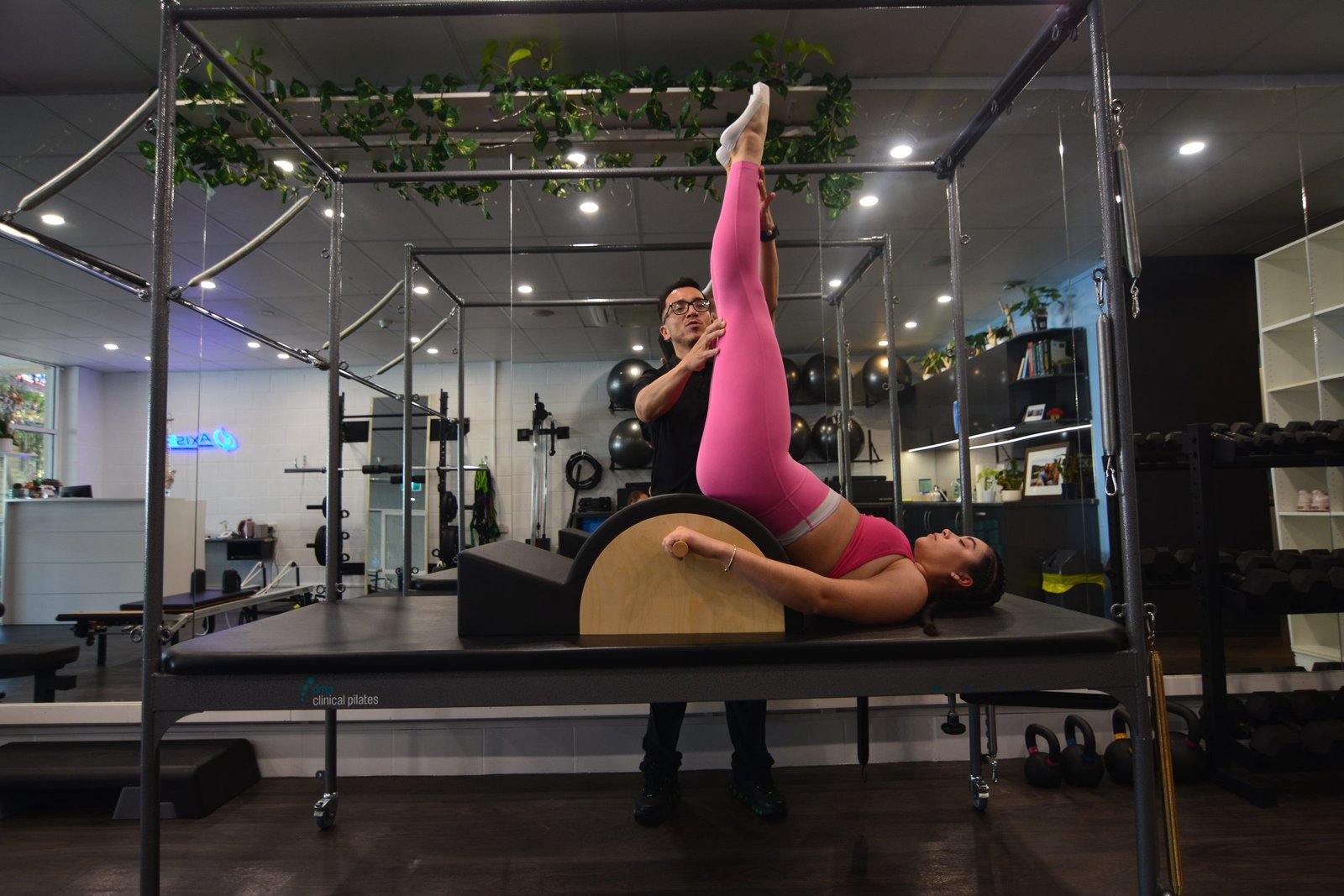
Movement with a clinical eye behind it.
Part of how we rebuild strength and control at Axis33, not a separate studio bolted on the side. Clinical and Classical Pilates, individual or small group, guided by a physiotherapist.
Four formats, all guided by a physiotherapist.
Clinical Pilates 1:1
- What it is
- One-on-one Pilates guided directly by a physiotherapist, using reformer and apparatus work as a rehabilitation tool.
- Who it's for
- People recovering from injury or surgery who need individually adapted exercise, not a generic class.
- What we treat
- Post-injury and post-surgical rehabilitation, chronic pain, and functional strength deficits.
- What happens in the session
- Exercises are selected and adjusted in real time based on what your body can do that day, the same clinical judgement as a physio consultation, applied through movement.
- How it helps
- Builds strength and control around an injury without the guesswork of a group class not designed for your specific case.
- What to expect
- Full attention for the whole session, and exercises that change as you progress.
Clinical Pilates Small Group
- What it is
- Close physiotherapist supervision with individually adapted exercises, in a group small enough that nobody just copies the person next to them.
- Who it's for
- People continuing rehab work who don't need full 1:1 attention but still want their exercises adapted to them specifically.
- What we treat
- Ongoing rehabilitation, general strength and mobility, and chronic pain management under supervision.
- What happens in the session
- Each person works from their own program within the same small class, with the physiotherapist adjusting each person's exercises individually.
- How it helps
- The clinical adaptation of 1:1 work at a more accessible price point.
- What to expect
- A capped group of no more than 4, so it never feels like a full class you're just keeping up with.
Classical Pilates 1:1
- What it is
- The traditional Pilates method, one-on-one, across the full apparatus: reformer, trapeze table and spine corrector.
- Who it's for
- People who already move well and want a full-apparatus conditioning session, rather than a clinical rehab focus.
- What we treat
- General conditioning, core strength, flexibility and body control. Not built around a specific injury.
- What happens in the session
- A structured sequence across the apparatus, following the classical method rather than a treatment plan.
- How it helps
- Builds whole-body strength and control with the depth of the full apparatus, in a private session.
- What to expect
- Fitted, comfortable clothing and grip socks if you have them.
Reformer Pilates
- What it is
- A group class on the reformer machine, capped small so instructors can still adjust the machine to you.
- Who it's for
- People who've built some base strength (through physio, Clinical Pilates, or prior experience) and are ready for a group format.
- What we treat
- General strength, stability, mobility and fitness. Not a substitute for 1:1 clinical work if you're mid-rehab.
- What happens in the class
- A coached full-body sequence on the reformer, with the instructor watching and correcting form throughout.
- How it helps
- Builds on the strength and control developed in physio or Clinical Pilates, in a more social, class-based format.
- What to expect
- A capped class, grip socks recommended, and instructors trained to adjust the machine to your level.
Who this is for
Recovering from an injury
- Building strength without aggravating an old injury
- Continuing rehab work after finishing physio treatment
- Chronic pain management under clinical supervision
Already moving well
- Posture and core strength after a desk-heavy week
- Returning to movement safely after pregnancy
- General conditioning, no injury involved
Questions before you book
See Group Classes for MAT33 and Cardio-Strength 33 questions.
What's the difference between Clinical and Classical Pilates?
Clinical Pilates is guided by a physiotherapist and built around rehabilitation and functional recovery. Classical Pilates follows the traditional method across the full apparatus without a clinical treatment focus.
Does private health insurance cover Pilates?
Clinical Pilates is sometimes covered depending on your provider and level of extras cover. Check your policy for physiotherapy or exercise physiology extras. Reformer group classes are not typically covered.
I'm currently in physio treatment. Can I do Pilates too?
Often, yes: ask your treating physiotherapist. Clinical Pilates 1:1 or Small Group is usually the right fit alongside active treatment, rather than a group Reformer class.
How far in advance do I need to book Reformer?
Reformer classes run on a fixed weekly schedule and fill up. Book as early as you can. Clinical and Classical 1:1 sessions are scheduled directly with your instructor.